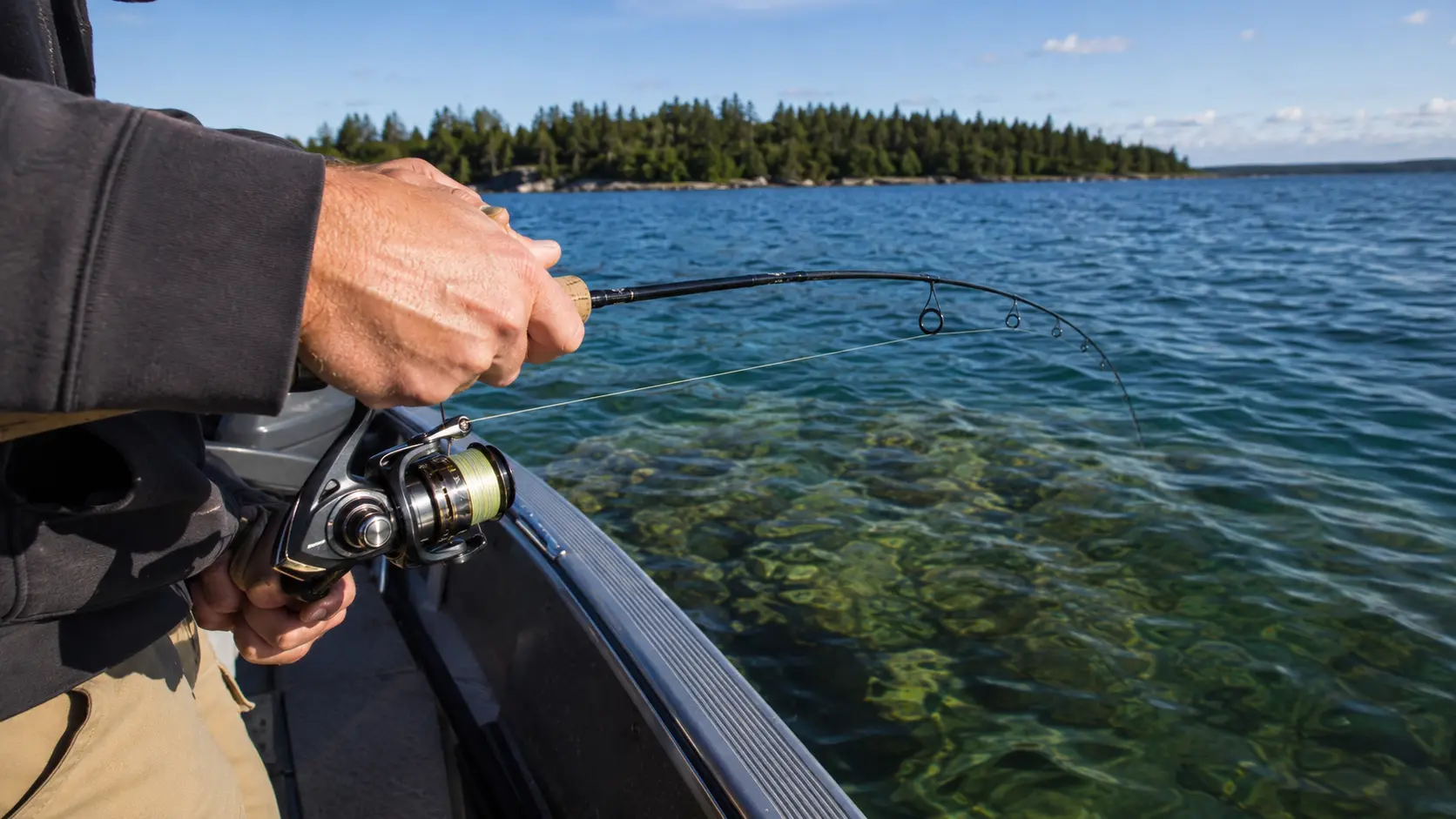
Walleye fishing methods are tools for controlling depth, speed and direction. A jig places a compact bait near a precise target. A spinner rig searches a flat. A crankbait covers shoreline or suspended fish. A slip float holds bait over cover without dragging through it. None is best every day. The useful skill is matching a method to the way fish are positioned, then making small changes until bites become repeatable.
Begin with two questions. Are the fish grouped or spread out? Are they close to bottom, in cover or suspended? Grouped fish suit vertical jigs and tight presentations. Scattered fish call for trolling, drifting or casting. Fish in weeds need a lure that stays clean or hangs above the plants. Suspended fish need careful depth control. Once those two questions are answered, tackle choice becomes much simpler.
Vertical jigging
Vertical jigging is at its best when the boat can stay over fish on a reef, point, river hole or deep edge. Use enough weight to keep the line close to vertical and feel bottom. Lower the jig, lift it with a short motion and let it fall on controlled line. Most bites come during the drop or as the lure pauses. Live minnows, nightcrawlers and soft plastics all work. Boat control is part of the method. Use the electric motor, wind or current to match the movement of the fish. If the line trails too far behind, add weight or slow the boat.
Casting jigs and plastics
Casting a jig covers shoreline, weeds and shallow rock while keeping a natural bottom contact. Cast past the target, let the lure reach the chosen depth and retrieve it with small lifts, drags or steady swimming. A paddletail can be reeled above weeds, while a fluke-style bait darts and glides near rock. In cold water, longer pauses often help. In warm water, a faster snap may trigger a chase. Watch the line as the jig falls. A jump, sideways move or early stop can signal a bite. Reel down and set the hook with firm pressure rather than a wild swing.
Bottom bouncers and spinner rigs
A bottom bouncer keeps a spinner rig near bottom while reducing snags. It is a strong choice for broad flats, weed edges, gradual slopes and scattered summer fish. Choose a weight that touches bottom regularly without dragging flat behind the boat. The spinner blade adds flash and vibration, while a nightcrawler, minnow or soft bait follows behind. Change blade size, colour, leader length and speed when fish follow without biting. Long passes find productive sections. Once bites come from one small area, shorten the pass or switch to a slower method. Good tracking turns a searching tool into a precise one.
Slip-float fishing
A slip float suspends bait at a chosen depth and can be cast easily because the stop slides through the rod guides. It works well along weed edges, over rock piles, beside timber and around current seams. Set the bait slightly above the fish so it remains visible and less likely to snag. Use enough weight to stand the float correctly and help a walleye take the bait with little resistance. A long rod picks up line before the hook set. Let the float go fully under, reel until the line is tight and sweep the rod back. This is a fine method for children and patient evening fishing.
Casting and trolling crankbaits
Crankbaits imitate minnows and cover water at a known depth. Cast them across points, along shorelines, above weeds or over reef tops. Troll them along basin edges, open-water bait schools and long breaks. Running depth depends on lure shape, line type, line length and speed. Keep a record after each bite so the setup can be repeated. Planer boards spread trolling lines and move lures away from boat noise. When casting, pauses and direction changes can trigger a following fish. Choose hooks that are strong and sharp, and keep pliers ready because multiple treble hooks require careful handling.
Jigging spoons and blade baits
Spoons and blade baits are compact lures that reach deep fish quickly. Their flash, vibration and rapid movement can call walleye from a distance. Drop the lure to the desired depth, lift it with a measured snap and let it fall on controlled line. Too much movement can push neutral fish away, so reduce the lift when marks appear but do not bite. These lures work from a boat and through ice. Tip a spoon with a minnow head where legal and useful. Check hooks often after contact with rock. A slightly dulled point can turn solid strikes into missed fish.
Control the boat, then the lure
Even the right lure fails when the boat moves too fast, too slowly or along the wrong line. Use the electric motor, kicker, drift sock or anchor system to hold a repeatable path. Watch the GPS trail and return over the depth or feature that produced bites. In wind, approach from the direction that gives the best control, not merely the shortest route. Keep lines away from the motor and other anglers. Clear communication prevents tangles when a fish is hooked. When everyone understands the pass, the boat becomes part of the fishing system and each lure spends more time in useful water.
Choose the method in four steps
First, set the target depth. Second, decide whether fish are grouped or spread out. Third, note cover such as weeds, wood, rock or open water. Fourth, judge how active the fish appear. A grouped deep school points toward vertical jigging. Scattered fish on a flat suit a spinner rig or crankbait. Fish above weeds may call for a slip float or swimming plastic. Suspended marks call for controlled trolling. Begin with that logical choice, then test speed and depth. This short routine prevents tackle changes with no purpose and helps every angler in the boat understand why a method is being used.