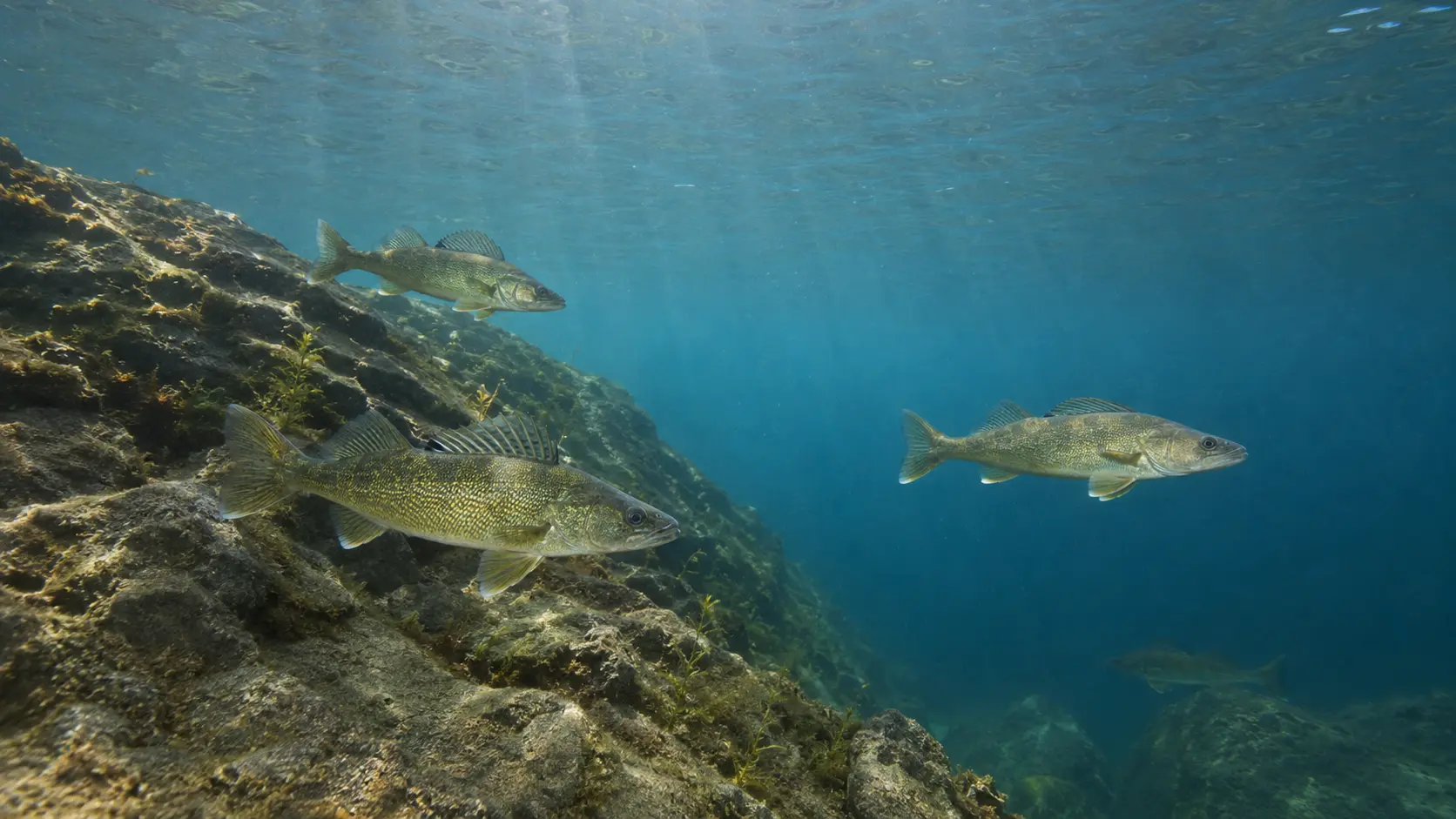
A seasonal pattern is a likely movement, not a fixed rule. Walleye respond to spawning needs, food, light, water temperature, oxygen, current and weather. Those forces change at a different pace on every Ontario lake. A shallow stained lake may warm weeks before a large clear lake in the same region. A cold front may slow a shallow bite but place fish tightly on a nearby break. The value of seasonal knowledge is that it gives you a sensible starting depth and type of structure.
The next step is testing that starting point. Watch surface temperature, water colour, wind direction and the amount of bait shown on sonar. Note where the first bite comes from and repeat that exact depth or bottom feature. If several fish share the same setting, you have a working daily pattern. Keep checking it as light and wind change. Walleye may slide only a few metres, yet that small move can turn a fast bite into an empty screen.
The spawning period
Walleye spawn in spring, often using rocky shorelines, reefs, river current and other clean, firm areas. Exact timing depends on latitude, ice-out and water temperature. Many spawning areas are protected by closed seasons or fish sanctuaries, so legal access comes before fishing plans. Where the season is open, nearby current seams, the first deeper water and routes leading away from spawning sites can hold fish. Males may remain shallow longer, while larger females often leave sooner. Cold water calls for slower speed and good boat control. Give fish time to take a jig, minnow or small plastic before setting the hook.
Post-spawn recovery
After spawning, fish do not all leave at once or travel to the same place. Some remain near current and shoreline rock. Others shift toward warming bays, incoming water, new weed growth or the first major point outside a spawning area. Baitfish and insects can draw walleye into surprisingly shallow water, mainly where wind creates colour and pushes food toward shore. Small jigs, minnows, plastics and shallow crankbaits fit this period. If shallow fish disappear under bright sun, check the nearest break rather than running across the lake. The deeper holding area may be only a short move away.
Early-summer spread
As water warms, more feeding choices open. Growing weeds hold minnows and young fish. Rocky points and reefs gather food in wind. Current areas keep delivering easy meals. Walleye may be found across several depth bands during the same day. Dawn, cloud and wind can bring them shallow, while calm bright periods move them toward cover, shade or deeper edges. This is a good time to fish quickly until you contact several fish. Cast a jig or crankbait across shallow structure, pull a spinner rig along the edge, and use sonar to check the next depth change when action slows.
Mid-summer choices
Summer does not always mean deep water. Some fish settle on deep reefs, humps and basin edges, but others stay in healthy weeds, use current or suspend near open-water bait. The best choice depends on the lake. Deep clear water may produce a strong offshore bite, while stained lakes can keep fish shallow through much of the day. Watch for mayfly or other insect activity, which can spread feeding fish across soft-bottom flats. When sonar shows suspended bait, count lures down or troll at the level of the food rather than following the bottom. Walleye usually feed where the meal is easiest to catch.
Fall feeding movement
Cooling water can place walleye near steep breaks, rocky points, river mouths, current and remaining green weeds. Baitfish may gather in large schools, and bigger lures can match the larger food available late in the year. Crankbaits, swimbaits, jigs and live-bait rigs all have a place. The best bite may occur during a short window tied to wind, cloud or fading light. Return to good structure more than once during the day. Cold rain and strong wind increase the need for proper clothing and conservative boat choices. A productive fall spot is not worth an unsafe crossing.
Winter travel routes
Under the ice, walleye often travel between feeding flats, points, humps, reefs and nearby deep water. Early and late in the day may bring short bursts of movement, though cloudy weather can spread activity across more hours. Start near a known structural edge and drill holes across several depths. A quiet hole is useful information, not a reason to stay. Move until sonar shows fish or bait. Jigging spoons, minnows and set lines cover active and neutral fish. Ice thickness is never uniform. Check conditions locally, carry safety gear and keep distance from current, pressure cracks and unfamiliar travel routes.
Daily changes within the season
A seasonal map gets you into the right neighbourhood, while daily conditions point to the right house. Wind can turn on a shoreline by pushing warm water and food toward it. Cloud may let fish roam higher or shallower. Bright calm weather can tighten them to weeds, rock shade or a deeper edge. Boat traffic may move fish away from a community spot. Water level changes can alter river current and shoreline access. Keep a simple log with date, temperature, wind, depth, lure, speed and bottom type. Over time, those notes show which patterns repeat on your favourite Ontario waters.
Turn clues into a working pattern
Treat each fish as a clue. Mark the location, then note depth, lure speed, bottom, nearby cover and the fish's height in the water. One bite may be luck, but three bites with shared details point to a pattern. Search for another place with the same details rather than staying until the first spot is empty. If wind, cloud or light changes, test how the fish moved before changing every lure. They may have slid from a reef top to its edge or risen toward bait. A good pattern is simple enough to repeat and flexible enough to change with the day.