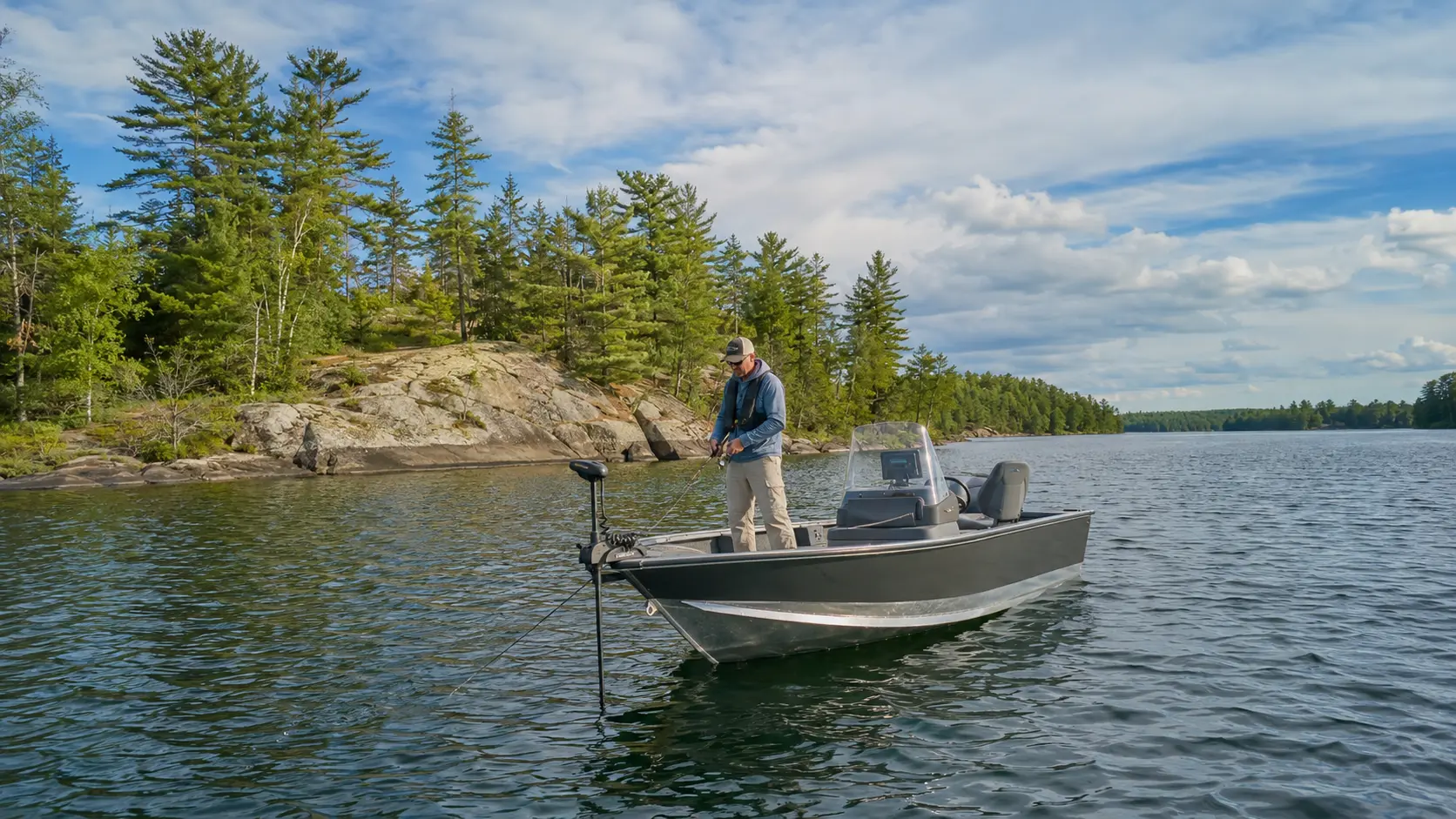
Summer gives Ontario walleye more places to live than any other season. Healthy weeds offer shade, oxygen and food. Reefs and humps provide hard-bottom feeding areas. Deep basin edges create comfortable daytime water, while open-water baitfish may pull walleye far from visible structure. The good news is that active fish are often willing to chase. The hard part is choosing which group to look for on a lake that may cover thousands of hectares.
Start with the main character of the water. On a shallow stained lake, weeds and shoreline breaks may remain productive all day. On a deep clear lake, low light and offshore structure may matter more. Large southern waters can hold roaming fish that spend most of the day off bottom. Ask where the lake's main forage lives in summer, then use maps and sonar to search those depth bands. Food is usually the shortest route to a useful pattern.
Do not leave the weeds too soon
Green cabbage, coontail and other healthy plants can hold summer walleye from morning until night. Look for an outside edge near deeper water, an inside turn, a point in the weedline or a pocket with a hard bottom. Wind pushing into the plants often improves the bite by moving food and reducing light. Cast jigs, paddletails and shallow crankbaits over the tops, or pull a spinner rig along the outside edge. A slip float keeps live bait above thick growth. If fish are buried in cover, use a more vertical line and enough weight to reach small openings without dragging weeds on every drop.
Read reefs and humps in layers
A reef is more than its shallowest number on the map. The top may hold fish under cloud or wind, while the edge and base become better in bright weather. Check the upwind side where water pushes food toward the structure, but do not ignore a calm pocket that gathers bait. Idle around the full feature before fishing and mark fish, bait and the sharpest depth changes. Begin above active marks with a jig, rig or crankbait. If fish sit tight to bottom, a slow vertical pass may work. When they rise off the edge, trolling or casting through their level is usually more productive.
Search deep flats and basin edges
Broad flats can hold scattered walleye that are difficult to find with a stationary method. Bottom bouncers, spinner rigs and crankbaits help cover these areas while staying close to the chosen depth. Focus on changes within the flat: a patch of rock, firmer bottom, a slight trough, a point extending from the edge or a school of bait. Use your GPS trail to repeat the productive section instead of making a new wide pass. When several bites come from a short stretch, stop trolling and work it with jigs or live-bait rigs. A small bottom change may be holding the whole group.
Look up for suspended walleye
Walleye do not need to touch bottom. On lakes with open-water smelt, cisco or other roaming forage, fish may suspend over very deep water. Sonar can show bait schools and larger marks near or below them. Run lures at the depth of the fish, not at the bottom depth shown on the screen. Planer boards spread lines away from the boat, while snap weights, diving devices and lead-core line help reach a set level. Speed and turning matter because they change lure action and depth. Mark every bite and circle back through the same line before the school moves.
Fish low-light windows well
Dawn, dusk, cloud and wind can move summer walleye higher on structure or into shallower water. Be in position before the window begins. A point, weed edge or reef that seemed empty at mid-afternoon may hold feeding fish near sunset. Casting crankbaits or paddletails lets you work quickly, while a slip float can hold a minnow in a tight lane. After dark, slow trolling with shallow crankbaits can work on lakes where it is safe and legal. Reduce deck lights, keep navigation lights working and choose familiar water free of heavy boat traffic and hidden rock.
Change speed before changing lakes
Summer fish can range from very active to unwilling within a few hours. Before leaving good marks, test speed. A faster crankbait or snap-jigged plastic may trigger a reaction bite from fish that ignore a slow minnow. On another day, a slow bottom bouncer or nearly still slip float may be the answer. Make one change at a time so the result teaches you something. Change speed, then depth, then colour or profile. When two anglers share a boat, begin with different lures and actions. Once one setup receives repeated bites, match the useful parts while keeping one line slightly different.
Protect deep-water fish
Walleye brought quickly from deep water may suffer pressure-related injury. Signs can include a swollen belly, bulging eyes or trouble swimming down. The best answer is to avoid targeting depths that make healthy release unlikely, mainly when you do not plan to keep fish or have already filled a legal limit. Move shallower and search for another group. Handle every released walleye quickly, support it properly and return it without a long photo session. Hot surface water adds stress, so have pliers and camera ready. Good fishing includes knowing when a productive deep mark should be left alone.
A useful summer search order
At first light, check a shallow point, weedline or reef top. As the sun rises, follow the nearest edge down and use sonar to look for fish or bait. If that route is empty, search a deep flat or main-lake structure with a moving method. Check open water when suspended bait is common on the lake. Return shallow when wind, cloud or evening light improves the cover. This order tests several major summer groups without random running. Keep each pass long enough to learn something, but do not wait over empty water. Summer rewards anglers who move with a reason and record where the food appears.