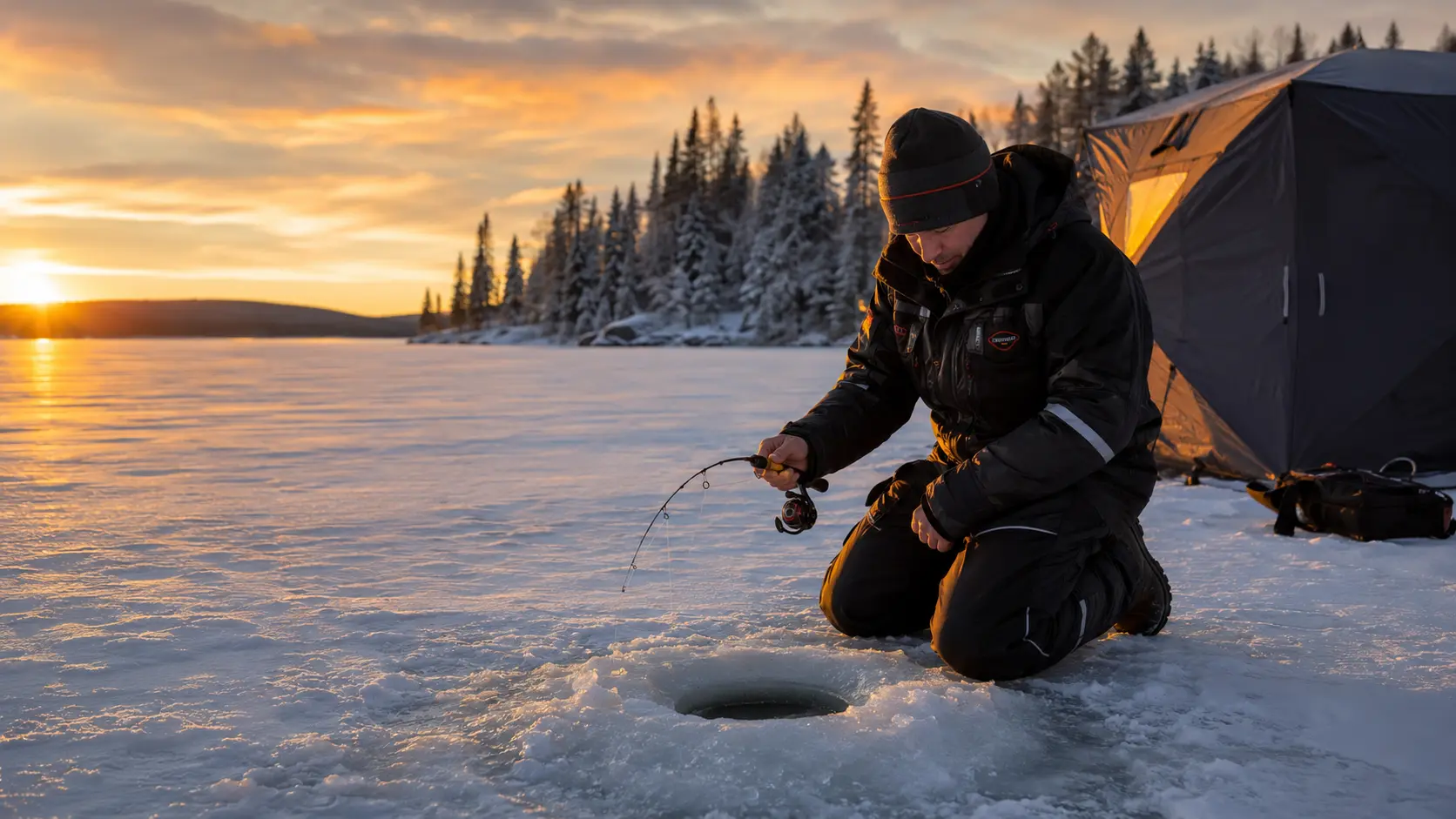
Fall and winter offer two distinct walleye trips tied together by cooling water and shorter days. Fall keeps the boat in play as fish feed near rock, current, basin edges and late green weeds. Winter turns the lake into a walking and snowmobile route, letting anglers sit directly above structure that was harder to hold on during open water. Both seasons can produce short, strong feeding windows. Arriving early and setting up before the light changes often matters more than staying in one place all day.
Cold-season success begins with safe choices. Fall wind and cold water reduce the margin for error in a boat. Winter ice can change thickness over a very short distance. No fish is worth crossing unsafe water. Check local reports, carry the right clothing and safety gear, and turn back when conditions are uncertain. A conservative plan still leaves many good fishing days, and it keeps the group ready for the next one.
Where fall fish gather
Cooling water often sends bait toward rocky points, steep breaks, current areas, river mouths and the remaining healthy weeds. Large walleye may use deep water during the day, then move onto a nearby feeding shelf as light fades. Search the full route rather than only the shallow top. A sharp inside turn, saddle or tip of a point can concentrate movement. Wind may improve one side of the lake for several days by pushing food and warmer surface water. Sonar marks help, but do not wait for a crowded screen. A few fish placed correctly near bait may be all a good evening spot needs.
Jigs, swimbaits and live bait
A jig remains a dependable fall choice because it can be fished vertically, dragged along a break or cast across a point. Larger minnows and plastics may match the season's forage, though size should follow the food in that lake. Heavy jigs hold bottom in wind and deep water, while lighter heads give a slower fall on sheltered structure. Swimbaits cover water and often draw hard strikes from feeding fish. A live-bait rig can tempt walleye that follow but refuse faster lures. Keep the hook sharp and check knots often because cold hands and rocky bottom both create small failures.
Troll the fall transition
Crankbaits help search long shorelines, basin edges and open-water bait during fall. Use lures that reach the fish's level and keep speed consistent enough to repeat a productive pass. In cold water, slow may work, but a faster pass can still trigger active fish. Turns let inside and outside lures change speed, giving a quick test. Keep notes on line length, lure, speed and depth after each bite. On large lakes, fish may be spread across kilometres of water. Trolling turns that scale into manageable lanes, then GPS marks point to areas that deserve another pass or slower fishing.
Begin winter on known structure
Early ice can place walleye near the same points, weed edges, reefs and narrows used late in the open-water season. The first safe trip is easier when you already know the structure from a boat and have saved GPS marks. Never assume familiar water means safe ice. Current, springs, inflows, narrows and pressure cracks can keep areas thin. Check thickness as you travel and use local access routes. Once set up, drill a line of holes from the shallow feeding area toward deep water. This lets you track fish movement rather than guessing one depth and waiting there for hours.
Use an active and a quiet winter line
A jigging spoon, lipless bait or small jig calls fish toward the hole with flash and vibration. A legal set line with a live minnow offers a quieter meal nearby. The pair shows whether fish want movement or patience. Keep the set line at a depth where the bait is easy to see, often just above bottom or at the level of suspended marks. When a fish appears on sonar, change jigging action before changing lures. Raise the bait slowly, pause, shake it in place or let it fall. A walleye following upward is often interested and may strike after one small change.
Time the winter feeding window
Many winter walleye spots turn on near dawn and dusk. Arrive early enough to drill holes and settle down before the first window. Noise from drilling, machines and moving gear may push shallow fish away for a time. During the quiet period, check deeper holes and map the edge. As light falls, move back toward the feeding flat or reef top. Some lakes also offer a midday bite under cloud, snow or stained water. Keep watching sonar even when action is slow. Fish may pass through for only a few minutes, and a lure already at the right depth has the best chance.
Cold-season safety rules the day
Fall boaters should wear lifejackets, carry dry clothing, keep communication gear protected and avoid long crossings in a poor forecast. Winter anglers need ice picks, a throw rope, flotation, cleats and a plan suited to local conditions. Travel with another person when possible and tell someone where you are going. Vehicle travel needs far more ice than foot travel, and published minimums are only general guidance. Ice is never fully predictable. Be wary around moving water, docks, reeds, pressure ridges and snow-covered thin spots. The safest choice is always to turn around when you do not know what lies ahead.
Keep the cold-season plan small
Cold weather makes long runs, tangled gear and poor setup choices more costly. Pick a compact area with a feeding flat, edge and deep-water route close together. In fall, make short trolling or jigging passes across all three. In winter, drill a line that covers them without requiring risky travel. Keep rods rigged before the best light arrives and store tools where gloved hands can reach them. Warm up before judgment or movement becomes slow. A small, well-chosen area often produces more than a wide search because anglers remain ready when the brief feeding window opens. Safe comfort supports better fishing decisions.