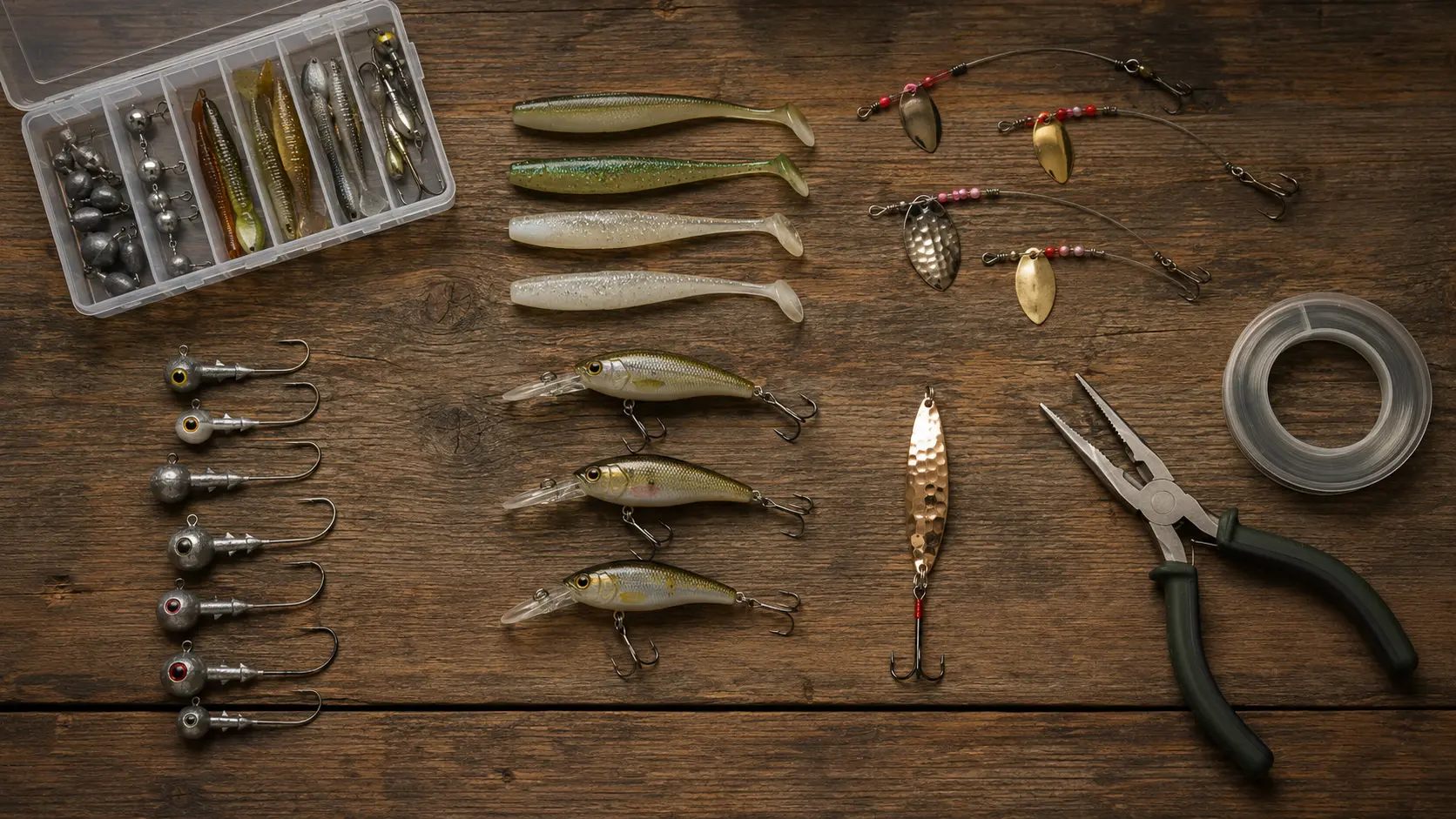
A good walleye tackle box is smaller than many anglers think. Most Ontario situations can be handled with a few jig weights, natural and bright plastics, spinner rigs, several crankbaits and basic tools. The goal is not to own every colour. It is to reach the fish, control the lure and make quick changes when depth or speed shifts. Reliable knots, sharp hooks and line in good condition bring more value than a crowded box.
Choose tackle for the water you fish most often. A river angler may need heavier jigs and snag-resistant setups. A Lake Erie troller needs rods, boards and depth-control gear. A shield-lake visitor may rely on jigs, rigs and casting baits. Start with a core kit, then add items when a real need appears. That keeps gear easy to pack, easy to learn and easy to replace in a small northern bait shop.
Rods and reels
A medium-light or medium spinning rod around six and a half to seven feet handles many jigging and rigging jobs. A sensitive tip shows light bites, while enough backbone sets the hook and controls a fish near the boat. A longer rod can improve casting distance and slip-float line pickup. Choose a reel with a smooth drag and enough capacity for the line used. Trolling calls for moderate-action rods that absorb surges and keep treble hooks pinned. Line-counter reels make lure distance repeatable. Match each rod to one main job instead of asking one setup to do everything poorly.
Main line and leaders
Braided line offers a thin diameter, strong feel and little stretch, which suits jigging and long casts. Add a fluorocarbon or clear nylon leader when water is clear, fish are wary or rock may rub the line. Monofilament stretches more and can be forgiving with crankbaits and live bait. Fluorocarbon main line sinks and offers good abrasion resistance but may hold more memory on a spinning reel. Choose strength for the method and cover rather than for the largest possible fish. Retie after snags, rough rock or contact with sharp teeth. The last metre of line receives the most wear.
Jigs and soft plastics
Carry jig heads from light shallow-water sizes to heavier heads for depth, wind and current. Round heads cover general use, while stand-up, weedless and other shapes solve specific problems. Useful plastic profiles include paddletails, minnows, grubs, worms and compact flukes. Natural colours such as pearl, smoke, green and brown fit clear water. Orange, chartreuse, pink and glow colours can show well in stained water or low light. Let the fish choose. Begin with a colour you can see and trust, then change after several good passes without contact. Keep plastics straight on the hook so they swim correctly.
Live bait choices
Minnows, nightcrawlers and leeches have long been used for Ontario walleye, but availability and bait rules vary by season and location. Buy from a lawful source and review Ontario's bait management rules before moving bait. Minnows fit cold water, jigs, set lines and live-bait rigs. Leeches are hardy in warm water and work well below floats or on rigs. Nightcrawlers pair naturally with spinner harnesses and slow rigs. Keep bait cool, clean and lively. Never release unused bait or dump bait water into a lake. Where live bait is restricted, modern plastics offer clean, effective choices without storage trouble.
Crankbaits and trolling gear
Choose crankbaits that cover shallow, middle and deep running ranges. Minnow shapes, shad shapes and lipless baits each give a different action. A few natural baitfish colours and several bright patterns cover most water. Know roughly how deep each lure runs on your line and normal speed. Trollers may add planer boards, snap weights, diving devices or lead-core line when fish are deep or spread out. Keep this gear labelled so productive setups can be repeated. Replace bent split rings and damaged hooks. Tune a crankbait that pulls to one side by making a tiny eye adjustment, then test it beside the boat.
Terminal gear and tools
Small details keep a day moving. Carry quality swivels, snaps, sinkers, bobber stops, beads, spare hooks and leader material. Long-nose pliers, cutters and a hook file belong within reach. A rubber landing net protects fish and reduces tangled hooks. A measuring board helps confirm legal length quickly. Add forceps for deep hooks and jaw spreaders for accidental pike catches, while keeping fingers away from gills and teeth. Store a small first-aid kit where it stays dry. Barbless hooks may be required on some water and can also make release quicker. Check the exact local rule before fishing.
Pack by method, not by colour
Organize boxes so one contains jigs, one holds terminal gear and one carries crankbaits. Keep spinner rigs wrapped to prevent tangles. A small day box can hold only the items needed for the current pattern, leaving extra gear dry and out of the way. Label lure depth or line settings when known. At the end of the trip, remove wet gear, dry hooks and replace anything that failed. Note which items were used and which never left the box. Over several trips, the useful kit becomes clear. Simpler storage means faster changes, fewer lost hooks and more room in the boat.
The small kit for a new angler
A new Ontario walleye angler can begin with one medium spinning outfit, braided line with clear leader, several jig weights, two plastic shapes, a few spinner rigs and three crankbaits covering shallow to deep water. Add pliers, cutters, a rubber net and a measuring board. This kit handles shorelines, weeds, rivers, reefs and basic trolling without filling the boat. Learn how each item reaches depth and behaves at different speeds. Replace only what wears out, then add gear for a known need. Confidence with a short kit produces better choices than carrying many lures that have never been tested.
Keep spare line and two trusted knots ready. Simple repairs then take minutes, not the best hour of the day.