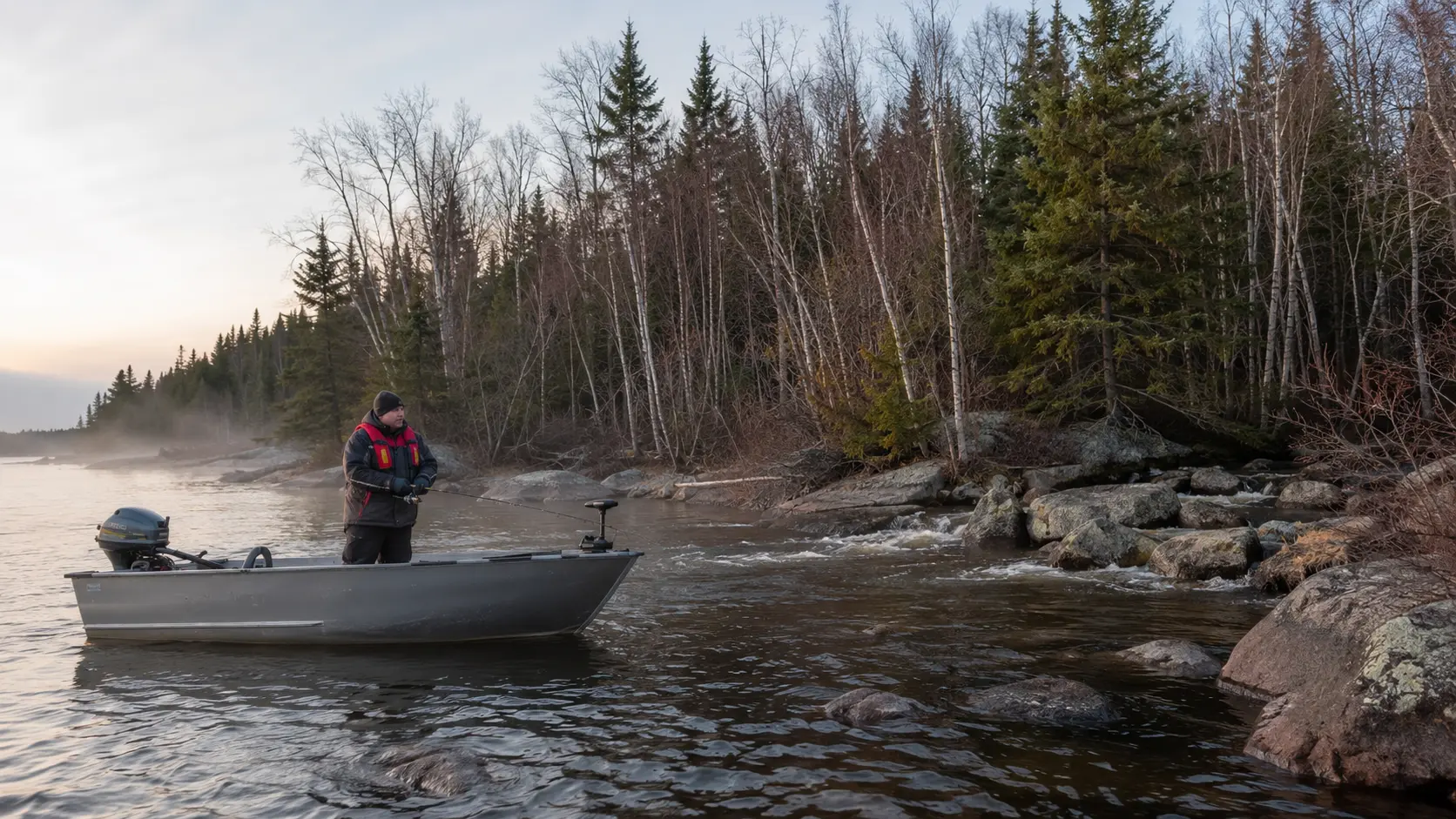
Spring walleye fishing brings cold water, changing levels and some of the year's best shallow opportunities. It also brings different opening dates across Ontario. The first job is checking the current rules for the Fisheries Management Zone and the exact lake or river. Some spawning areas remain protected after nearby water opens. Once you know where and when fishing is legal, focus on routes leading away from spawning habitat and places that warm or gather food faster than the main lake.
Early fish often reward slow, accurate fishing. A jig held close to bottom can be more useful than a fast search lure when water is still cold. Yet spring is not always a slow bite. Wind, warm rain or moving bait can bring a sharp feeding window. Carry a few ways to cover water, keep watching temperature and return to a promising shoreline when the sun or wind has had time to change it.
Begin near spawning routes
Walleye may spawn in rivers, creek mouths, rocky shoals, rubble shorelines and reef areas. Afterward, many fish use nearby breaks, points, current seams and protected bays. Look for a route from shallow spawning water toward a feeding flat or deeper holding area. A point at the mouth of a bay, the edge of a river hole or a narrow passage can gather moving fish. Do not crowd visible spawning fish or enter a sanctuary. Work legal water outside the protected area and let the fish come to you. The first sharp depth change is often a sensible place to begin.
Find warmer and coloured water
A difference of only a degree or two can matter in spring. Dark-bottom bays, north-facing shorelines receiving long afternoon sun, incoming creeks and windblown banks may warm before the open lake. Slightly coloured water cuts bright light and can make shallow fish less wary. Use a temperature gauge while idling and note any change. Warm water with no food may still be empty, so watch for minnows, birds and sonar marks. If cold clear water meets warmer stained water, fish the edge. That meeting line can create a narrow feeding lane that is easy to overlook at boat speed.
Jig with control
A lead-head jig remains one of the best spring tools because it reaches bottom, works at many speeds and takes live bait or plastic. Use the lightest weight that lets you feel bottom and hold a useful line angle. In current or wind, that may mean adding weight. In calm shallow water, a lighter jig falls slowly and hangs in front of fish longer. Minnows are a trusted choice, while small paddletails, fluke-style plastics and soft grubs cover water without constant bait changes. Keep movements short in cold water. Many bites feel like added weight rather than a hard strike.
Cast shallow crankbaits
Crankbaits are useful when spring walleye spread across shoreline rock, sand or emerging weeds. A shallow-running minnow bait can be cast parallel to shore and retrieved slowly with pauses. Suspending models stay in the strike zone when stopped, which can help in cold water. At night or during low light, fish may move into water only a few feet deep. Keep noise low, make long casts and use a steady path. Choose a lure that runs above the bottom rather than digging into every rock. If fish follow without biting, slow down, pause longer or move to a smaller profile.
Work current without losing contact
Rivers and narrows can hold spring walleye because current carries food and provides clear travel lanes. Fish rarely sit in the strongest flow. Check seams, eddies, inside bends, bridge areas, wing dams, current breaks and the downstream side of points. Position the boat so your jig moves naturally while still touching bottom often enough to track depth. A vertical presentation can be very precise, while a cast across the seam covers more water. Watch for floating debris and rapidly changing levels. Current near dams and fast narrows can be dangerous, and local closures may protect these areas.
Let wind help your search
A manageable wind can warm a shoreline, stir the bottom and push minnows toward a bank or point. Fish the side receiving the wind when boat control and safety allow. A controlled drift with jigs covers water naturally. Casting toward shore and working back along the slope also keeps the lure in several depth bands. If the wind becomes too strong, move into a protected bay with similar structure rather than fighting the main lake. Spring water is cold enough to make an unexpected swim life-threatening. Wear a lifejacket, keep spare dry clothing in the boat and avoid risky crossings.
Handle spring fish with care
Large female walleye may still be recovering from spawning. Decide quickly whether a legal fish will be kept or released. Keep tools ready so hooks come out without delay. Wet your hands before touching the fish, support the belly and avoid hanging a heavy fish by the jaw. Take a quick photo close to the water, then hold the fish upright until it swims away with strength. Follow all size, season and limit rules for the exact water. Selective harvest of smaller legal fish can provide a meal while allowing larger breeding fish to return, where the rules and local fishery support that choice.
A dependable spring day
Begin near a legal current area, warming bay or rocky route away from spawning water. Use a jig to check the first break, then cast a crankbait or plastic across the shallow flat if the sun or wind improves it. During bright calm hours, move slightly deeper and slow the presentation. Return to the best shallow area near evening. Keep changing location in small steps instead of making long runs. Spring fish often stay close to a good route even when they leave the exact spot. This steady plan keeps lures near likely water and reduces cold boat travel when conditions are still unsettled.