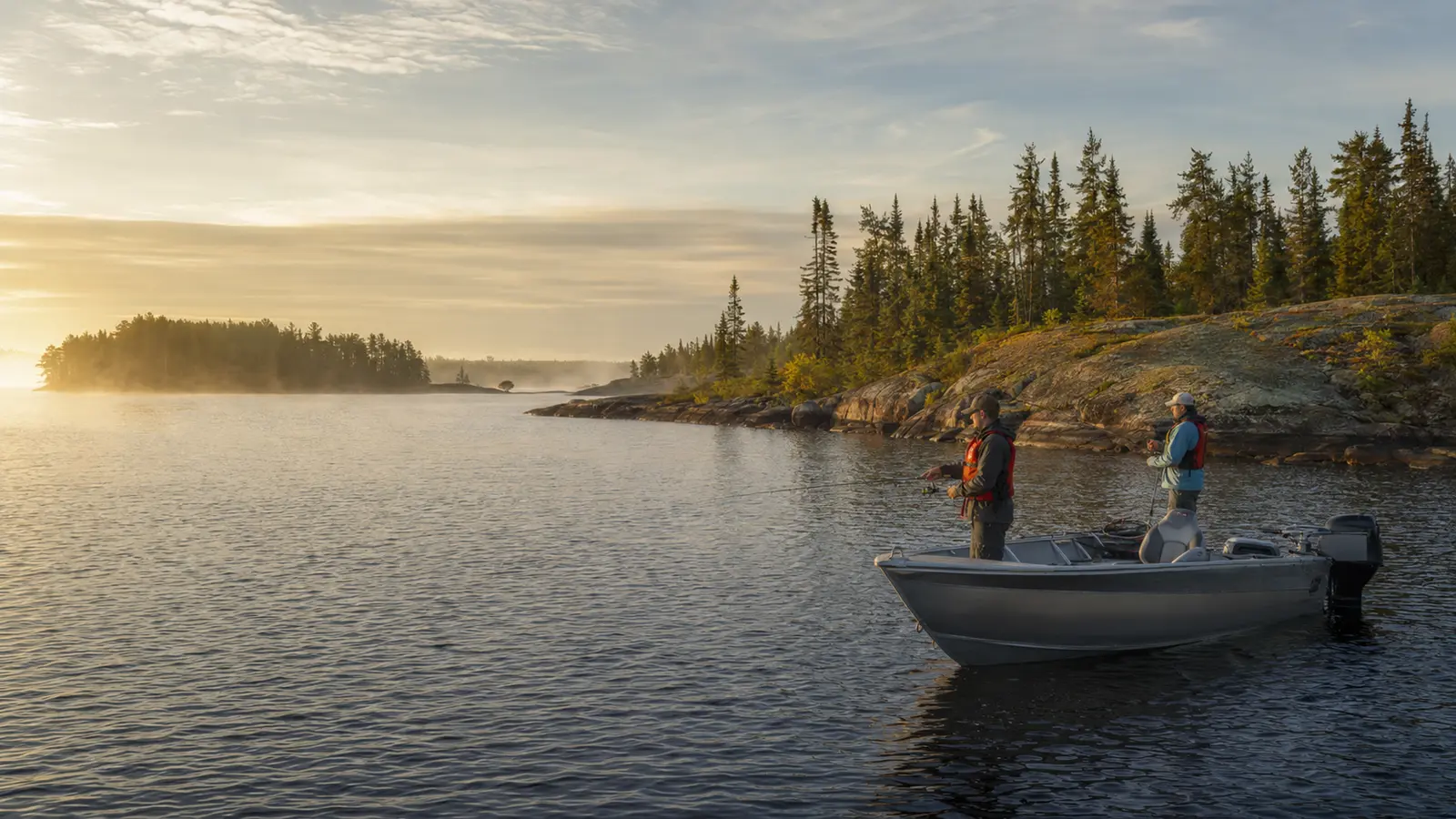
Lac Seul is one of the names that comes up quickly when anglers talk about walleye fishing in Northwestern Ontario. The lake spreads through a long chain of bays, channels, islands and points, giving fish many places to feed and giving anglers many ways to build a day. You can jig a windblown point in the morning, move through a neck-down area at noon and finish with a trolling pass along a broad shoreline break. The setting feels northern from the first run, with tea-coloured water, exposed rock and spruce-lined shores around nearly every turn.
That much water can look intimidating on a first trip, but Lac Seul becomes easier to read when you divide it into small pieces. Start near the area where you are staying. Mark three or four types of structure, then compare depth, wind, current and bait at each one. Walleye often use repeatable routes between protected bays, island points, narrows and deeper water. Once a few bites show the day’s depth and bottom type, similar places can provide a working pattern without a long run across unfamiliar water.
Why Lac Seul suits walleye
Lac Seul has the mix of structure that lets walleye move without leaving useful habitat. Rocky shorelines meet softer bays. Islands create protected sides, windblown sides and narrow passages. Points extend toward deeper water, while saddles and inside turns give fish travel lanes close to food. The stained water may also keep fish comfortable in shallower areas or active during brighter parts of the day. That does not mean every likely-looking spot holds fish. It means anglers can test several strong options within one part of the lake and let bites narrow the search.
The lake is also large enough to support several fishing styles. Anglers who like vertical jigging can work tight groups of fish. Those who prefer covering water can troll spinner rigs or crankbaits along breaks and broad flats. Casting soft plastics works well when walleye are spread along rock, weeds or current seams. Carry a small set of dependable methods and choose the one that matches the depth and shape of the area in front of the boat.
Start with islands, points and channels
Island points are a sound first stop because they often join shallow feeding water to a quick route toward depth. Pay attention to the side receiving wind, but keep boat safety in mind when waves build. A light chop can move bait and make walleye less wary. The sheltered side may still be better when the wind is strong, when water warms in spring or when fish are resting. Use sonar to see how the point continues below the surface rather than judging it only by the shoreline.
Channels and narrows add another useful clue. Water moving through a pinch point may position bait and fish along an edge, a turn or the first break outside the narrowest section. Approach slowly and watch for rock. Make a controlled pass, mark each bite and repeat the same line before moving. If the area has several small points close together, test them in order. The best one often has a slightly sharper edge, a patch of harder bottom or a better connection to deep water.
Spring and early summer locations
After the walleye season opens, warming water, incoming flow and shallow food can draw fish toward bays, shorelines and current areas. Look for protected water close to a deeper channel, then test the first break outside the warmest shallows. Small jigs tipped with soft plastics or live bait allow a slow presentation when the water is cold. Keep the boat far enough away that the lure reaches fish before the hull passes over them. A slip float can hold bait above snaggy rock or wood when fish do not want to chase.
As early summer settles in, many fish move toward points, emerging weeds and defined breaks. Some will remain shallow under cloud or wind, while others set up a little deeper during calm, bright weather. A jig remains useful, but spinner rigs begin to cover more water. Use enough weight to stay near bottom without dragging constantly. If several fish come from the same depth, follow that contour to the next point or island rather than leaving the area for a distant spot.
Mid-summer patterns
Summer spreads walleye across more of the lake. Reefs, humps, long points, deeper shoreline breaks and basin edges may all hold fish. Begin by checking places that join two depth ranges, such as a broad top that falls into a channel. Sonar helps confirm fish and bait, but marks alone do not prove walleye are ready to feed. Make a short pass with a jig, rig or crankbait, then change speed or angle before deciding the spot is empty.
Trolling can be useful when fish are scattered. Bottom bouncers and spinner rigs follow contour lines and cover broad flats. Crankbaits work along deeper edges or over open water when baitfish pull walleye away from the bottom. Keep track of lure depth, boat speed and the direction of every productive pass. On a large lake, a small speed change can matter because it changes both lure action and running depth. Repeat the details that led to a bite.
Fall fishing on Lac Seul
Cooling water often brings walleye toward strong feeding areas near deeper routes. Steep points, channel edges, narrows and the base of rocky structure deserve time. Fish may gather more tightly than they did in summer, making vertical jigging a good choice once a group is found. Heavier jigs help maintain contact in wind or deeper water, but use the lightest weight that still keeps the lure controlled. Soft plastics, minnows where legal and jigging spoons all have a place.
Fall weather can shorten safe fishing windows. Cold water raises the cost of a mistake, and large stretches of Lac Seul can become rough. Wear a lifejacket, carry dry clothing, protect communication gear and avoid long open crossings in a poor forecast. Plan a few close-to-camp locations before leaving the dock. A nearby point or channel edge may save the day when wind removes the more distant option.
A practical Lac Seul tackle plan
A medium spinning rod, braided main line and a clear leader cover much of the lake. Bring jigs in several weights, natural and bright soft plastics, spinner rigs, bottom bouncers and crankbaits that run at different depths. The stained water makes gold, chartreuse, orange and glow finishes useful choices, but plain patterns still catch fish. Let water colour, cloud and fish response guide colour changes instead of assuming one finish works every day.
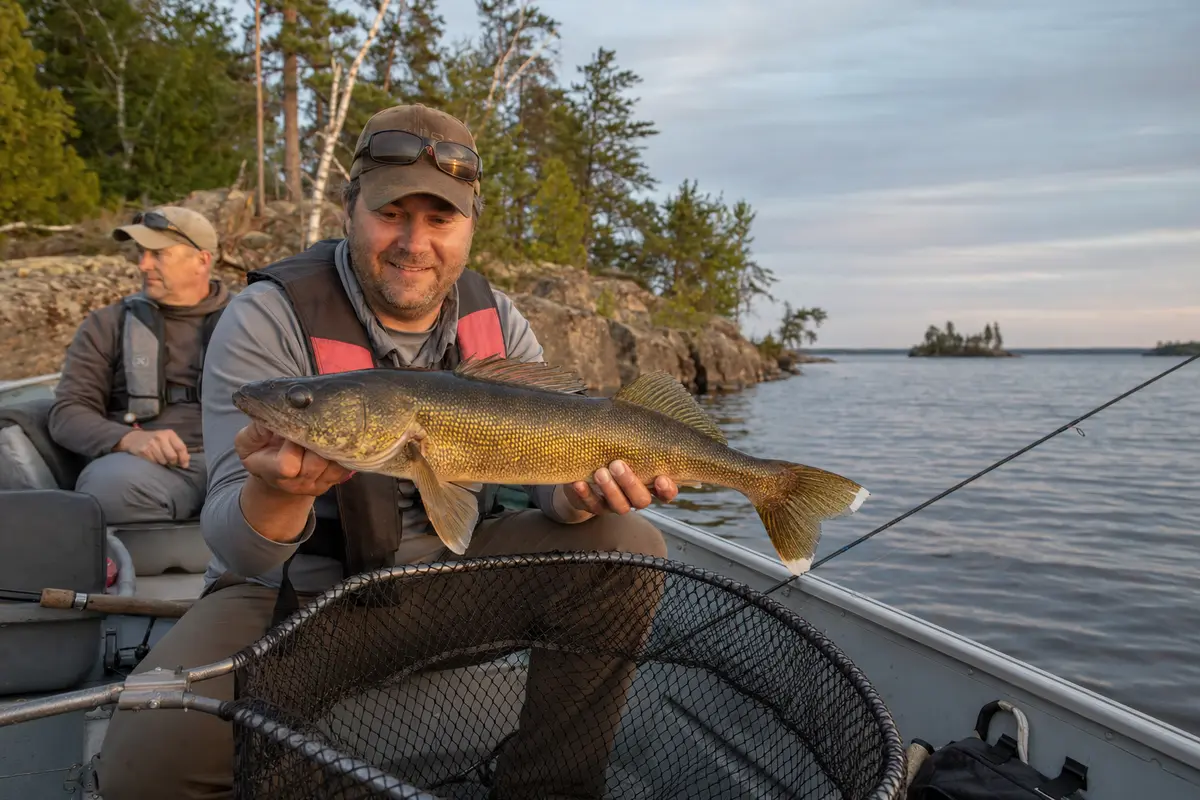
Pack a rubber landing net, long-nose pliers, cutters and a measuring board. Handle fish with wet hands and support larger walleye horizontally. Keep the fish close to the water and make photos quickly. Check the current Ontario fishing rules for the Fisheries Management Zone and any Lac Seul exceptions before the trip. Seasons, limits and size rules may change, and the legal details belong in the boat with the tackle.
Navigation and daily planning
Lac Seul has many islands, shoals and long routes that can look different on the return trip. Use a current chart, keep GPS trails and slow down whenever the safe line is uncertain. Ask the lodge or camp operator about known hazards and the usual route to the first fishing areas. Save fuel for a wind change and keep a close backup spot. Tell someone where the boat is going and when it should return.
A simple day plan works well. Fish one protected area, one wind-affected area and one place connected to deeper water. Note the depth and bottom at every bite. If two locations share the same feature, test a third place with that feature before changing the plan. This keeps the day focused while leaving room to respond to weather and fish movement. The lake is vast, but anglers only need to solve the section they can fish safely that day.
Stay at Lac Seul's Reel Inn
A good base makes a large-water trip much easier. Lac Seul's Reel Inn, south of Ear Falls on Highway 105, gives anglers a practical place to stay near the water. Its website lists housekeeping fishing packages, boat rentals, bait and gas on site, docking and a concrete boat ramp. Those services can reduce daily driving and help a group spend more of its time on the lake.
The Reel Inn is a good fit for anglers who want a drive-to Lac Seul trip with lodging and fishing needs in one place. Before booking, check the current package details, accommodation choices, boat terms and available dates directly with the lodge. Ask what is supplied, what your group should bring and which lake routes suit the expected wind. A clear plan with the host is a strong way to begin a first Lac Seul visit.
Visit Lac Seul's Reel Inn ↗