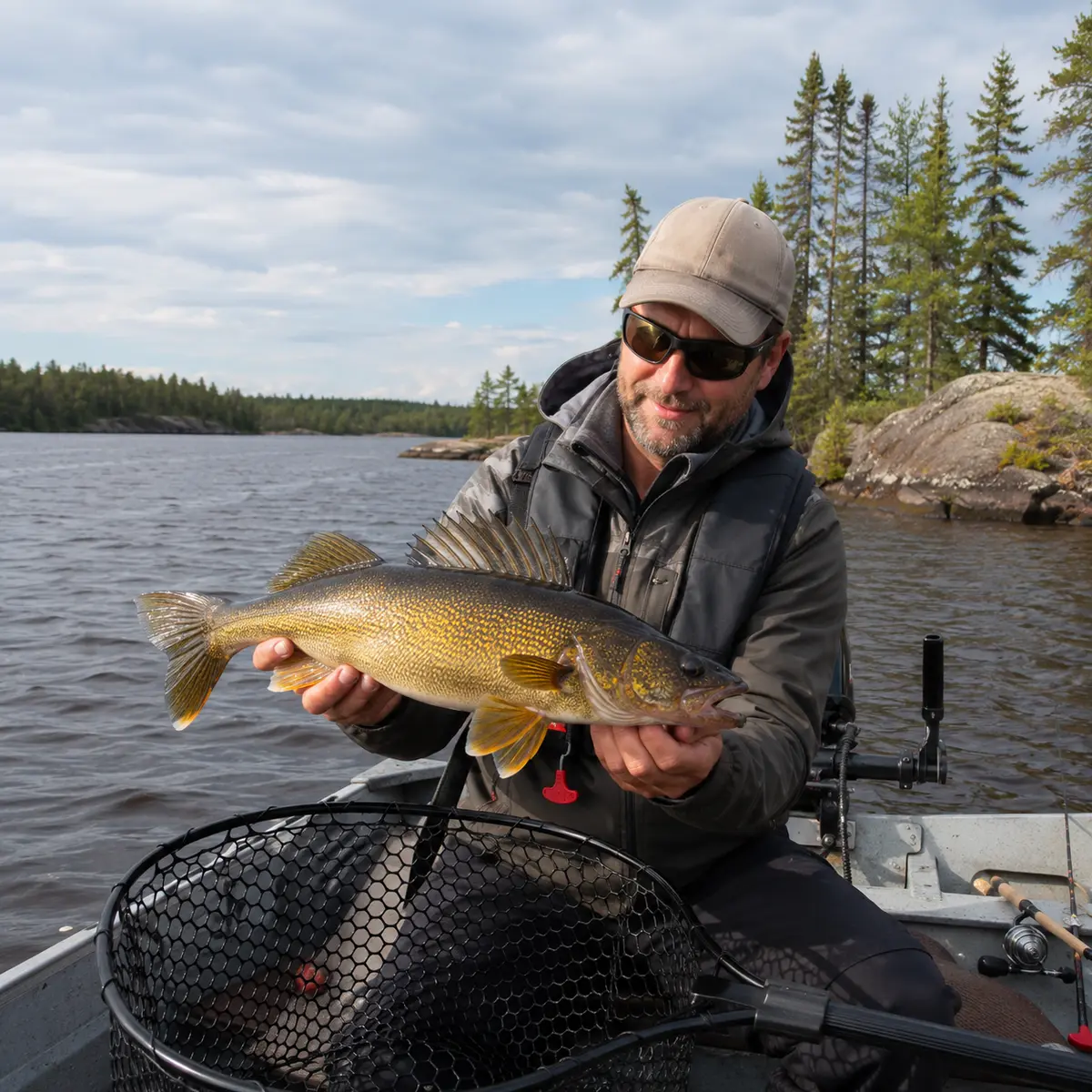
Excerpt: Lac Seul gives anglers tea-stained water, island points, reefs and long channels. Here is where to begin near Ear Falls and how to plan a productive northern fishing week.
Lac Seul is big enough to make a first-time angler pause at the dock. It stretches roughly 241 kilometres across Northwestern Ontario and ranks among the largest lakes held wholly inside the province. Yet the section near Ear Falls does not feel like one blank sheet of open water. It is a maze of islands, bays, narrows, reefs and shoreline breaks. That gives anglers many good places to fish without running half the lake.
Why the Ear Falls water works
The lake drains through the English River at Ear Falls, and current is one of the key pieces in this end of Lac Seul. Neck-down areas, channel edges and points near moving water can gather baitfish and set walleyes on a predictable line. The water is stained a deep tea colour by natural material from the surrounding forest and wetlands. Walleye eyes are built for low light, so this dark water can keep fish feeding during parts of the day when clear-lake walleyes may slide deeper.
Start with island points that meet a channel. Look for a hard edge, a saddle between islands or a windward shoreline where a light chop pushes food toward the rocks. A jig and minnow, leech or soft plastic is a fine way to learn the depth. Once fish scatter, a spinner rig or crankbait lets you cover more ground while holding the productive contour.
Follow the season
Spring fish often stay near current, warming bays and shallow rock after spawning. Early summer brings new weed growth, points and the first sharp drop near shore into play. By midsummer, some walleyes hold on reefs and humps while others follow bait along deep breaks or suspend over open water. Fall often tightens groups near channel edges, steep points and rocky feeding areas close to depth.
Do not race from spot to spot. Mark every bite, note the depth and watch what wind is doing. If two fish come from ten metres of shoreline with the same rock and depth, the next similar stretch is a better bet than a distant pin on a map. This slow, repeatable approach also helps a new visitor learn safe travel lines between nearby islands rather than spending the day chasing reports from far away. On Lac Seul, a pattern built close to camp can save fuel and keep the day safer when the wind rises.
A lake made by water and rock
Lac Seul sits on the old bed of glacial Lake Agassiz. Its mix of clay, silt, rock and flooded channels helps explain why one bay can look and fish very differently from the next. The lake level is regulated, so an old GPS trail or last year's shoreline view is never a reason to run fast near reefs. Use a current chart, follow known travel lines and ask a local host about hazards.
Stay at Lac Seul Evergreen Lodge
Lac Seul Evergreen Lodge gives fishing groups a drive-to base at Ear Falls. The lodge lists ten furnished cabins for groups of different sizes, along with deep-hulled boats and on-site fishing facilities. Its location puts guests near the northern reaches of Lac Seul without giving up road access.
For a first visit, ask the lodge about current water levels, safe routes and the depth producing that week. That local starting point, paired with a simple jig, spinner and crankbait plan, can turn a huge lake into a manageable piece of water.
Visit Lac Seul Evergreen Lodge ↗