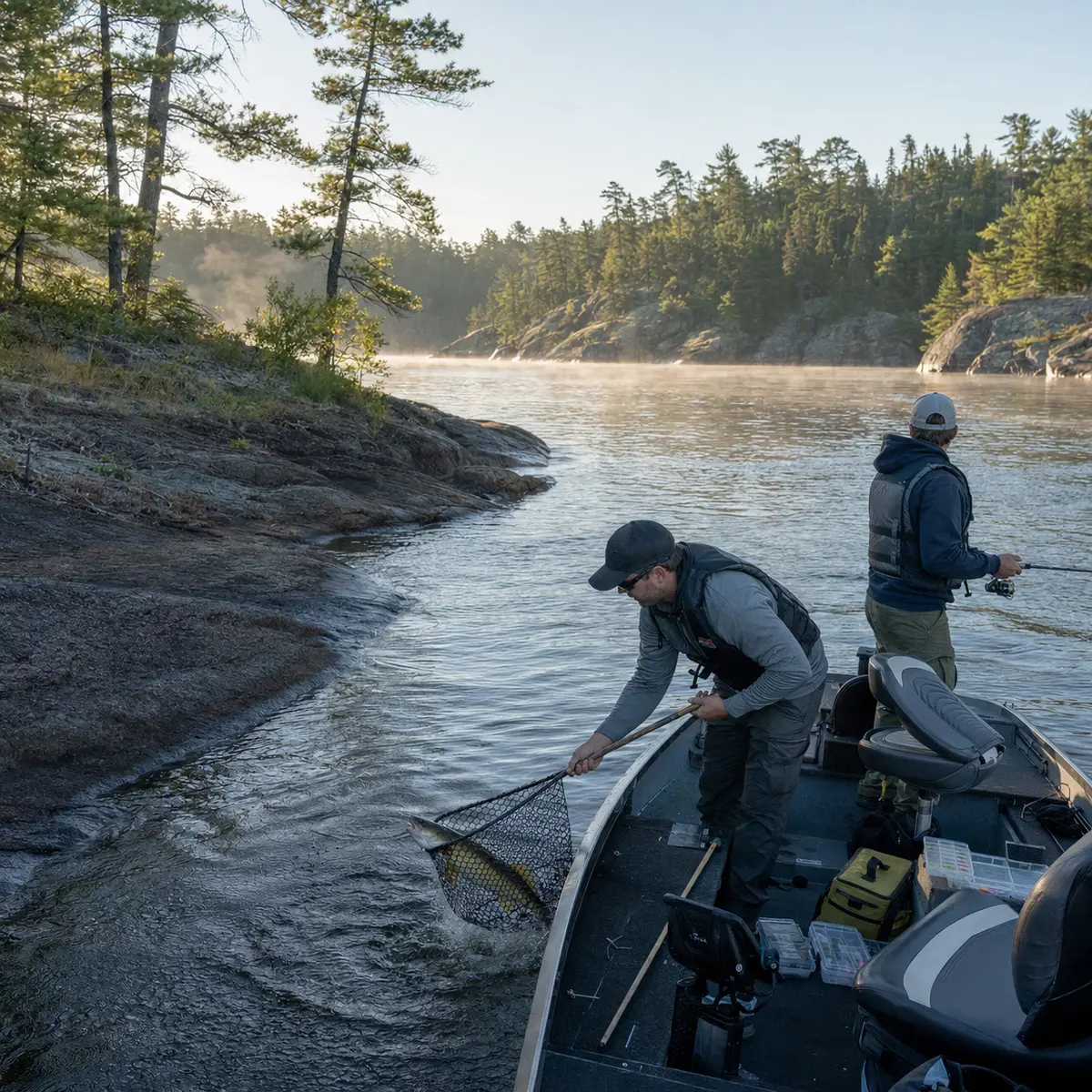
Excerpt: The French River mixes moving water, deep holes, rocky points and weed-filled bays. That gives anglers a fine shot at walleye, bass, pike and muskie in one trip.
The French River has carried people between Lake Nipissing and Georgian Bay for centuries. It follows an old travel route used by Indigenous peoples, French travellers, fur traders and voyageurs. In 1986, it became Canada's first designated Heritage River. Today, its 105-kilometre waterway draws anglers who want more than one kind of fishing in a week. Ontario Parks lists walleye, smallmouth bass and northern pike among its common game fish, while muskie and largemouth bass add more choices. The river's changing current, depth and bottom keep the fishing from feeling the same around every bend.
Start by reading the current
Walleye often use the softer water beside current rather than fighting the strongest flow. Check the downstream side of points, island tips, narrows and the edge where fast water meets a quiet pocket. A jig dropped near bottom is a good first test. Use enough weight to keep contact while the boat moves, but not so much that the jig drags through every crack.
Current strength changes after rain and through the season. Fish may move onto a shallow shelf during low light, then settle along a deeper seam once the sun rises. Make several short passes at different angles. One line may keep the bait in the strike zone twice as long as another.
Rock, weeds and quiet bays
Rocky shorelines and points draw smallmouth bass through much of summer. Cast tubes, small crankbaits or jig-and-plastic rigs along boulders and broken rock. In back bays, weed edges may hold northern pike and largemouth bass. A spinnerbait or weedless spoon covers those areas quickly, while a slow plastic can pick apart holes in the growth.
Muskie anglers need heavier rods, strong leaders, large nets and release tools ready before the first cast. The French River can produce a fish that tests both angler and gear. Keep the fight short, support the fish in the water and take any photo quickly. A careful release matters on a fish that may have taken many years to reach its size.
Fish the season in front of you
Spring and early summer favour warming bays, river mouths, current edges and shallow rock. Through midsummer, walleye may shift toward deeper holes, channel breaks and wind-affected points. Bass often remain near rock or weed cover, while pike may use cooler weed edges and deeper nearby water. Fall can bring walleye back to defined current breaks and rocky feeding areas as baitfish gather.
Because the river includes channels, rapids, rocks and broad open reaches, navigation deserves care. Use a proper chart or fishing map, follow known routes and slow down in unfamiliar water. Check the current Fisheries Management Zone 11 rules and any waterbody exceptions before fishing.
Stay at Wolseley Lodge
Wolseley Lodge has welcomed French River guests since 1928. The drive-in lodge sits on Wolseley Bay and lists 16 private cabins, many on the riverfront or overlooking the bay. Guests may bring a boat or rent from the lodge fleet, and private docks with hydro are available for many visiting boats.
Fishing groups can also use live bait service, a fish-cleaning hut, freezing space and local fishing maps. Canoes, kayaks, a beach and other family activities give non-anglers something to enjoy. For a group seeking walleye in the morning and bass, pike or muskie later in the day, Wolseley Lodge puts a wide piece of the French River within reach for many returning groups.
Visit Wolseley Lodge ↗